
Our Place in Space
Designing a Journey through Space and Time
Our Place in Space (OPIS) was a captivating project that allowed us to leverage Augmented Reality (AR) technology to create an immersive journey through the solar system. As an Interaction Designer, I had the incredible opportunity to contribute to this multi-faceted design project that aimed to redefine how we perceive our place in the universe.
Challenge
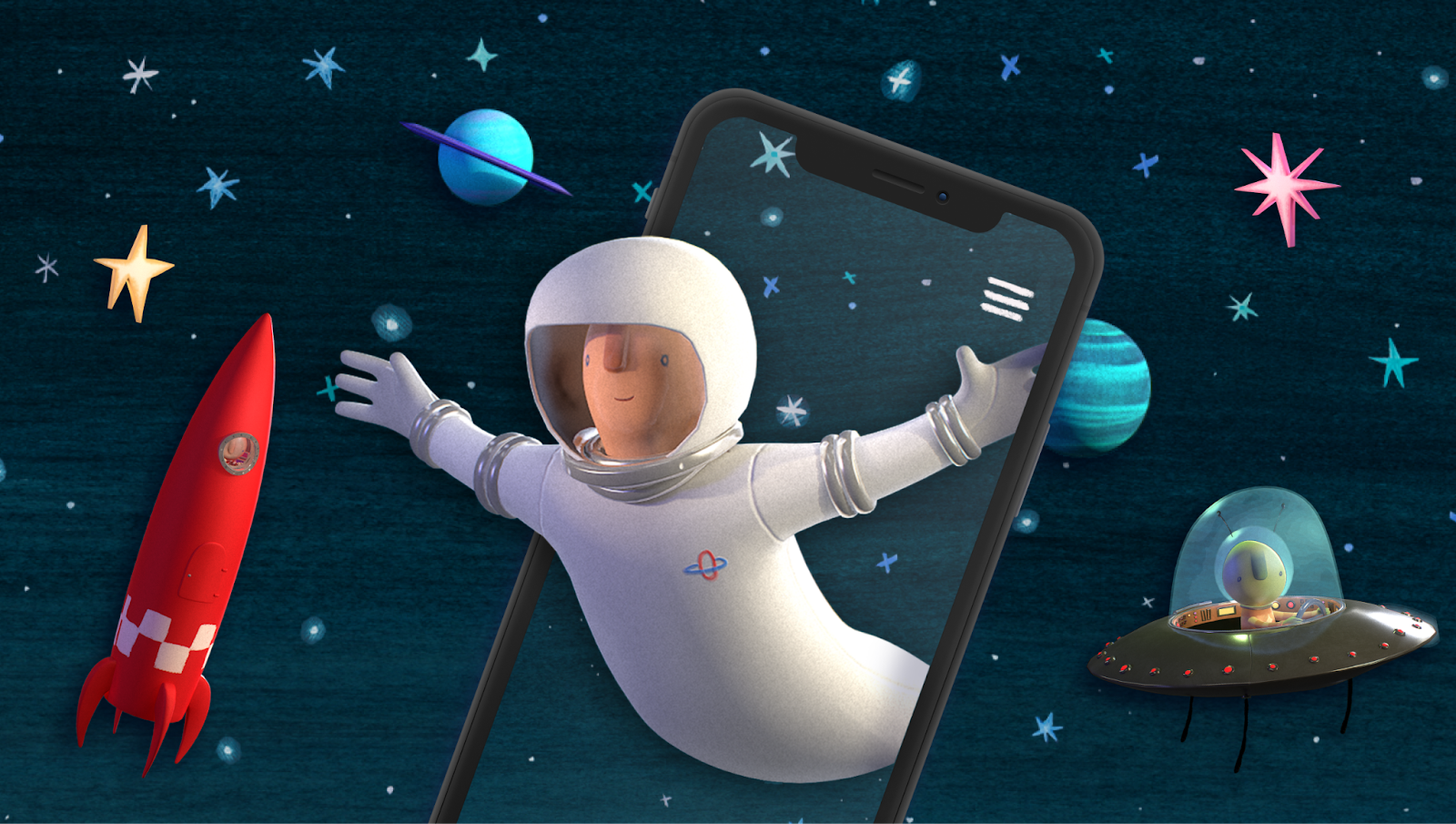
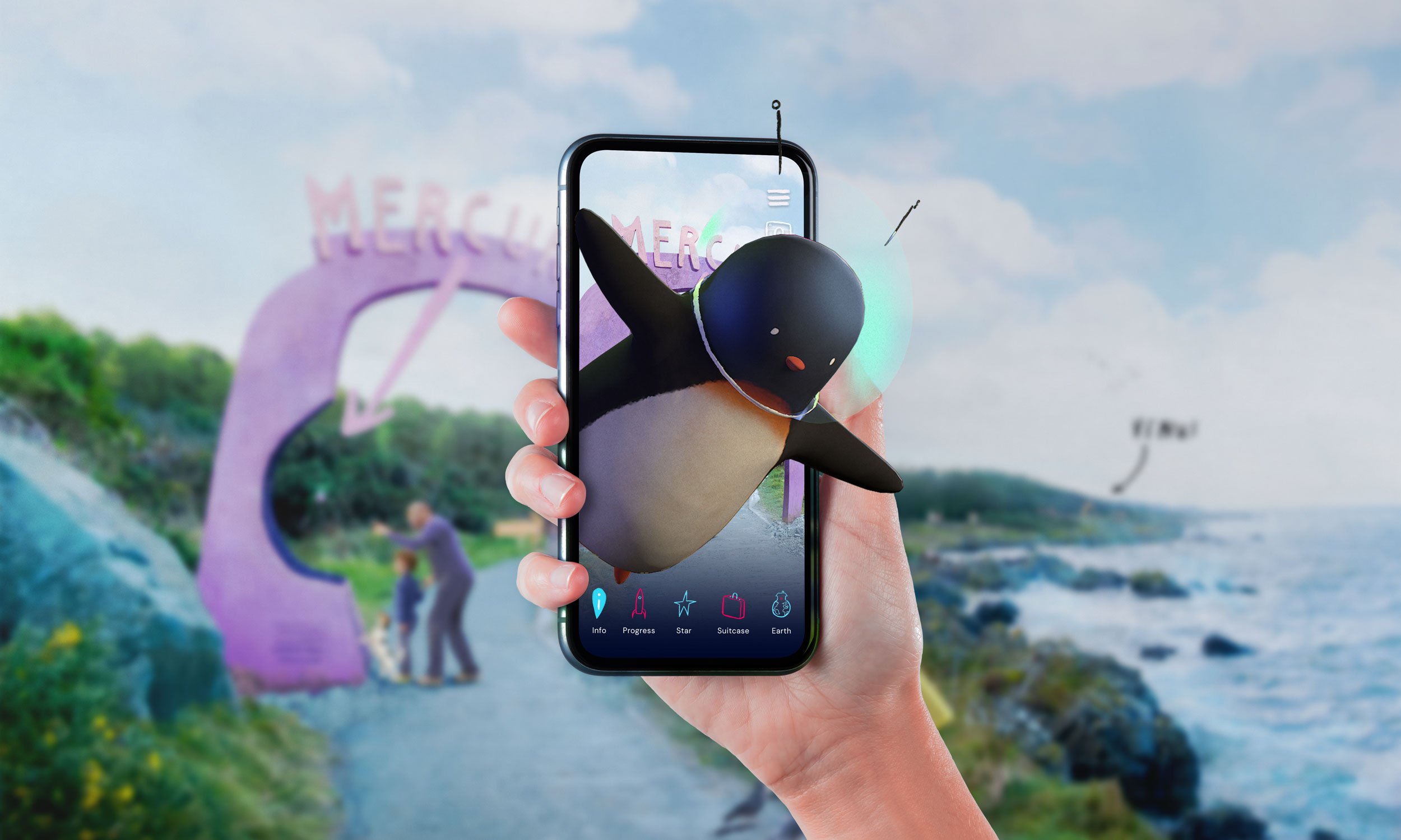
Our challenge was to enhance a 10km-long sculpture trail, featuring scale models of planets, by integrating AR technology. The project's central idea was to explore the insignificance of earthly divisions when viewed from the cosmic perspective. The goal was to create an experience that encouraged users to appreciate the vastness of space while keeping their feet on the ground.
Understanding the user
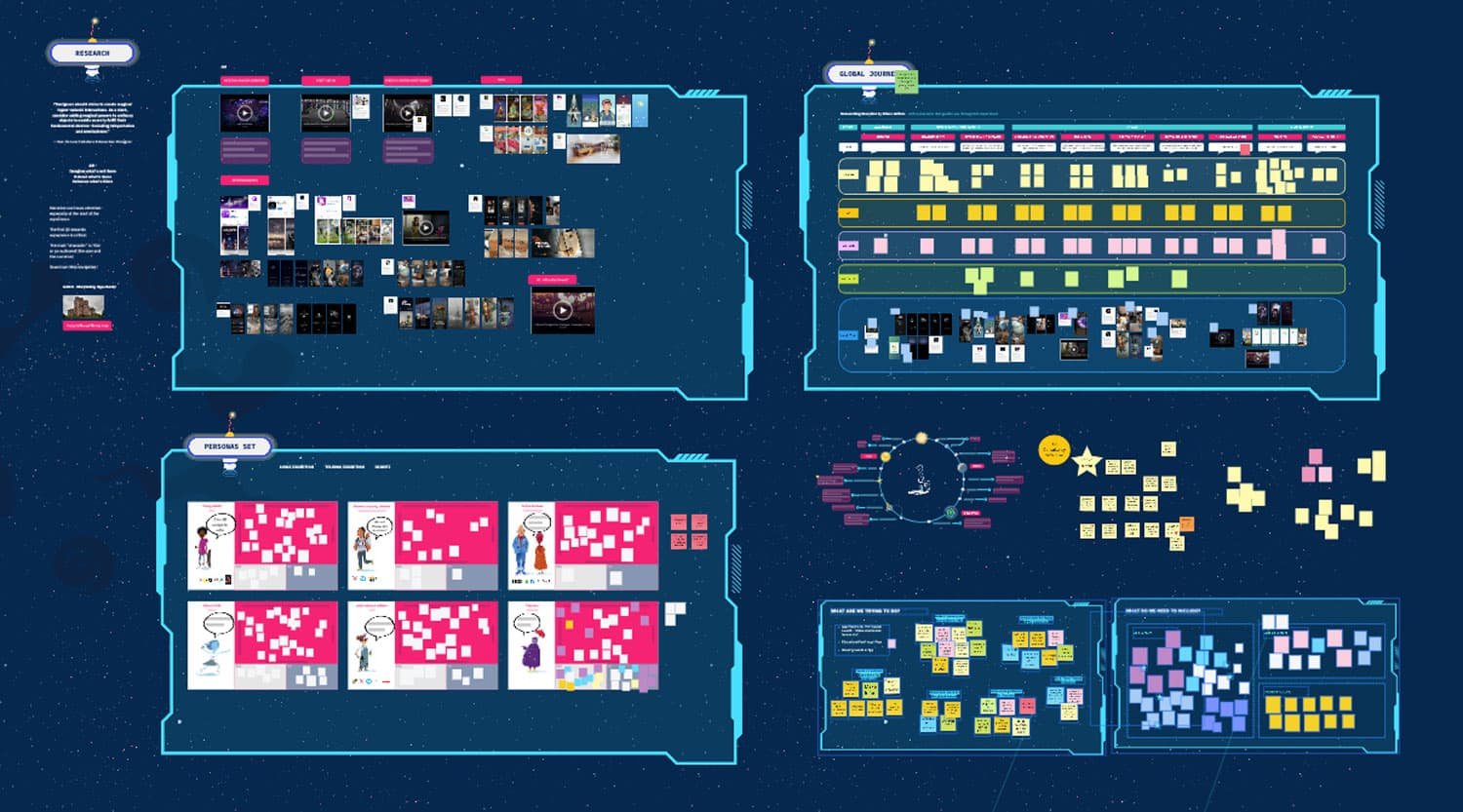
Our journey began by deeply understanding our diverse user base. This experience was open to people of all age groups so we held focus groups with people of various age ranges, parents and educators, gathering essential insights into user expectations and needs in the process.
For example we discovered that parents sought a storytelling and educational element whereas children and young people valued real time statistics of their journey through the trail and content to share to social media.
Crafting the User Experience
Based on user insights we started by describing a set of outcomes that we wanted users to experience. We then worked backwards to define the steps of the journey to achieving these goals.
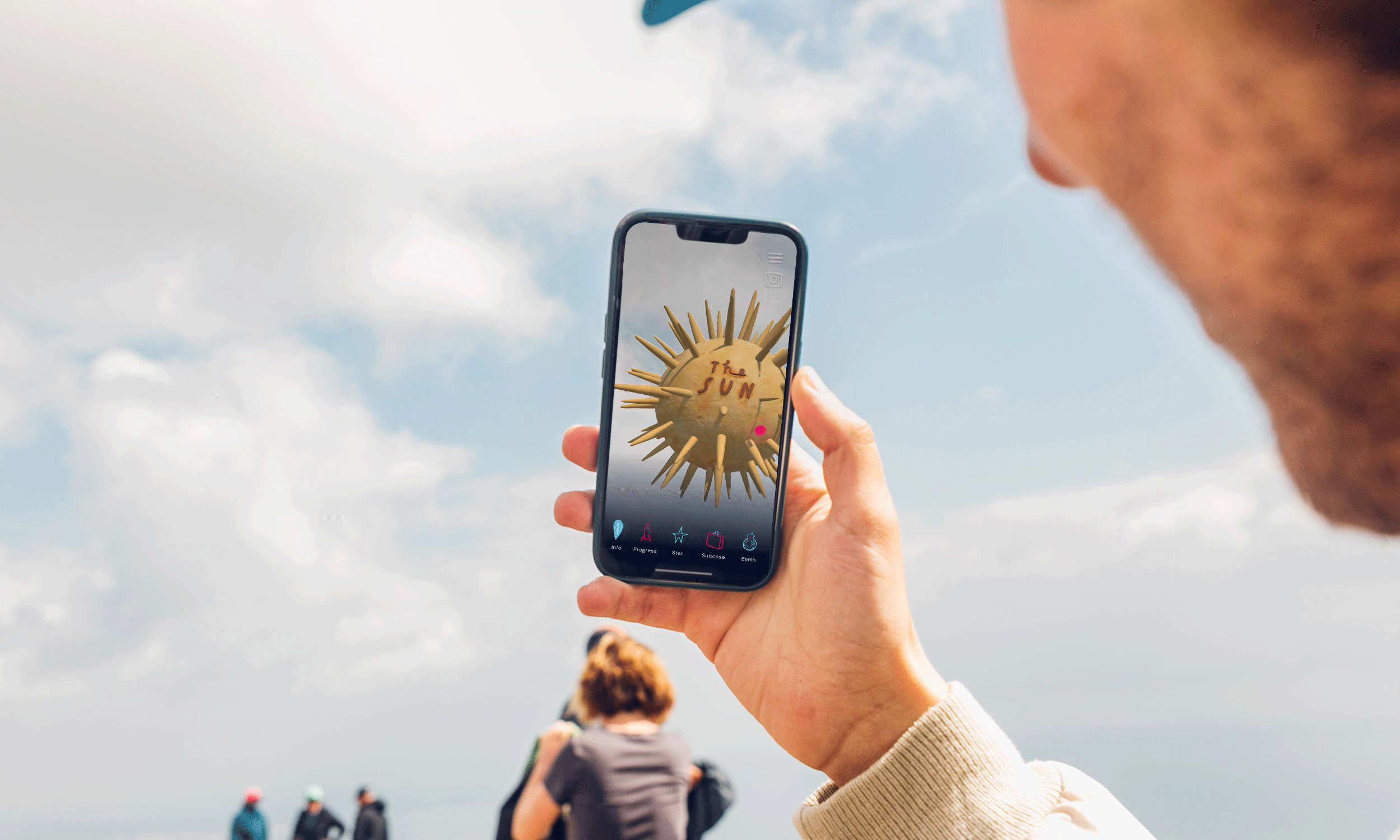
We designed the Our Place in Space app to offer episodic content. This content structure created distinct micro-experiences that came together to tell a holistic story of the user’s journey through space, the trail itself and a reflection on the history of mankind. The app's interactions were synchronised with users' proximity to the trail sculptures, allowing users to pause and appreciate the celestial distances. User’s could add their own star to the universe, a capturable moment that facilitated reflection of one’s own place in space.
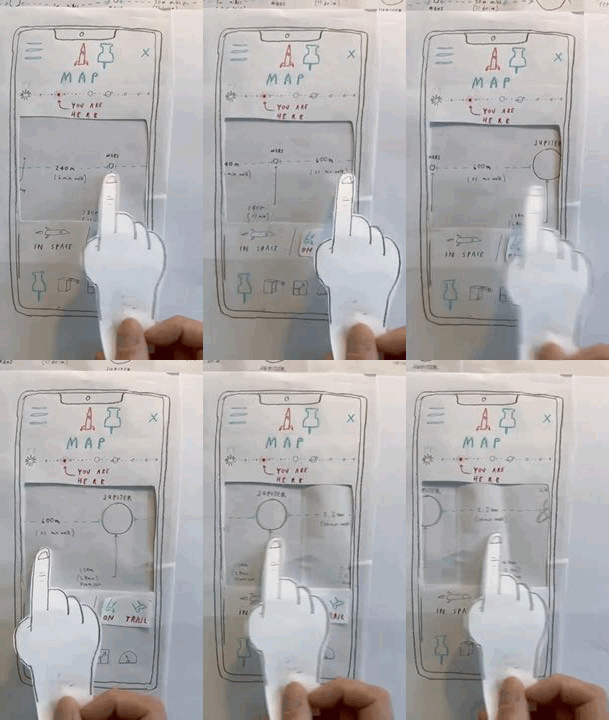
We conducted thorough testing of the app during its development, involving a diverse group of users. This process led to regular updates and improvements driven by user feedback.
One notable issue we encountered was that users sometimes struggled to locate AR elements when they spawned on screen. In response, we made a significant enhancement to the app: AR elements now always appear in front of the user, accompanied by engaging animations upon their arrival. This adjustment not only resolves the visibility issue but also enhances the overall user experience, allowing users to fully appreciate the elements and engage more effectively.
Iterative Improvement
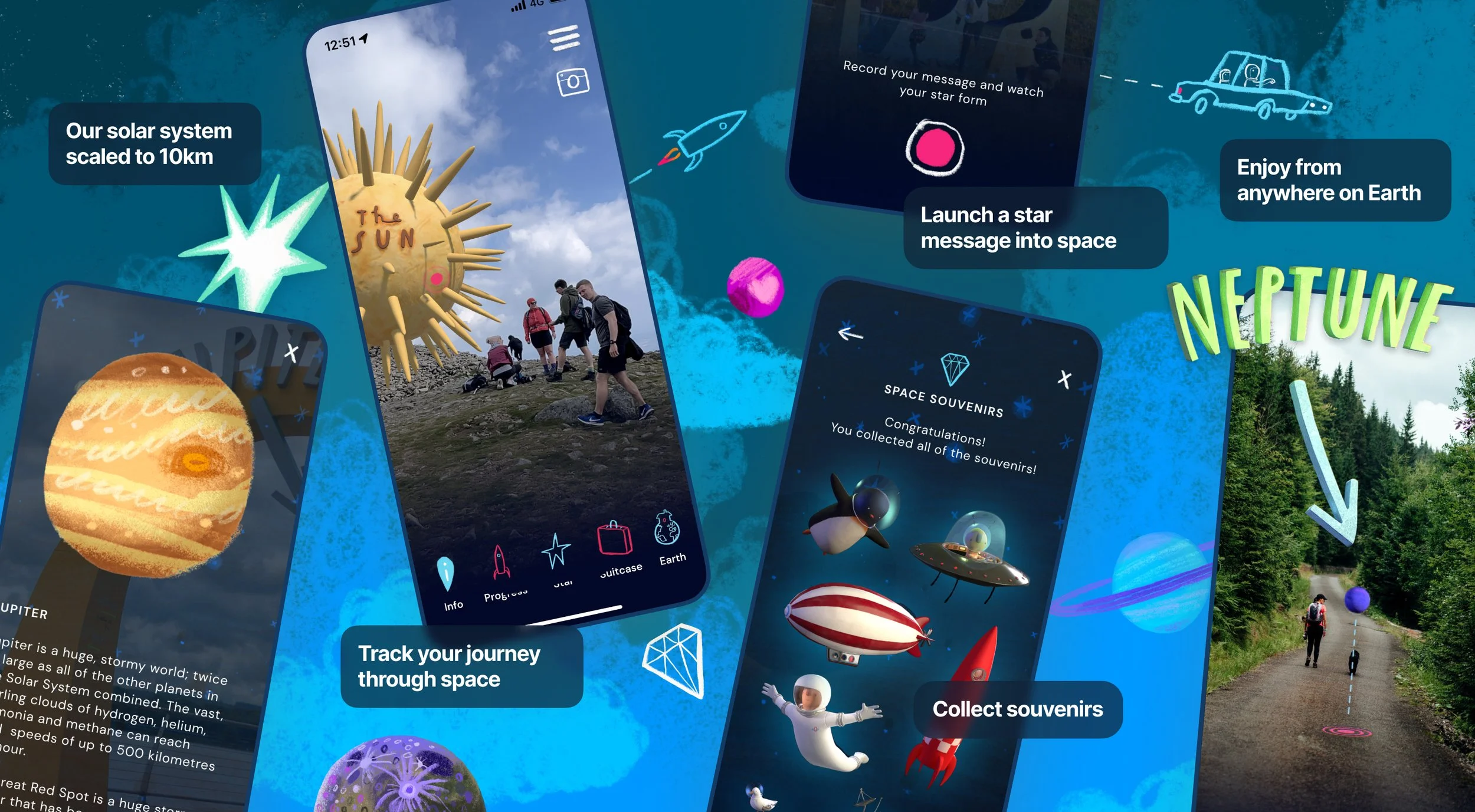
Reflecting on Impact
Mapping the experience in detail:
Our user journey maps, informed by co-design workshops and testing, were instrumental in achieving our goals.
Making the experience accessible:
User feedback and evidence of inclusivity showed us that enabling remote access was essential.
Providing context:
Introductory materials and visual prompts, helped users orient themselves effectively.
Iteration:
Testing-based adaptations kept the user experience intuitive.
Avoiding overwhelming users:
Segmentation and simplicity, driven by user feedback, ensured that users engaged without feeling overwhelmed.
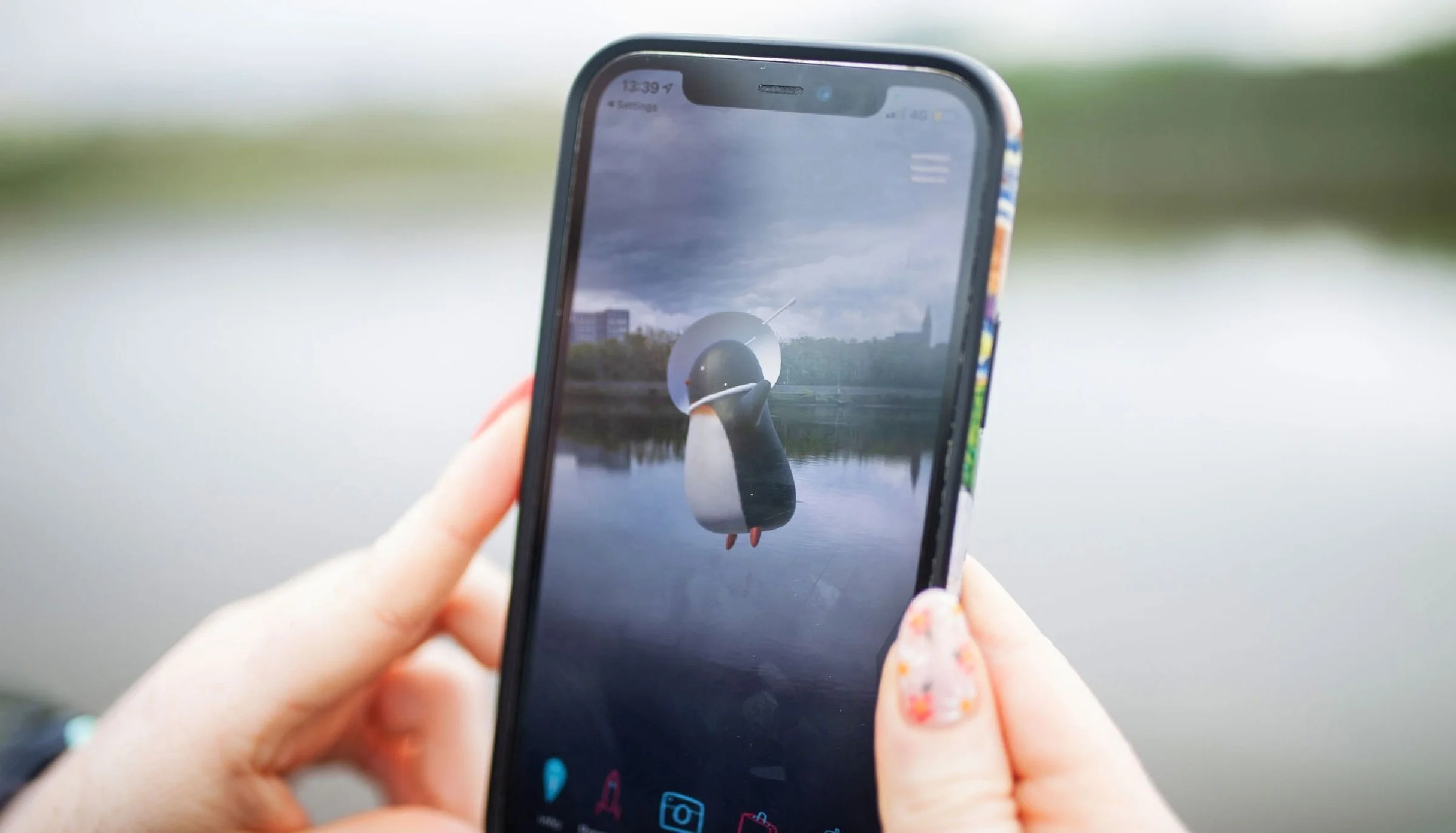
This project was an incredible opportunity to merge creativity, technology, and education, providing a fresh perspective on our place in the universe. It reinforced the importance of user-centred design and adaptability in the ever-evolving world of AR technology.
Awards
🏆 App Design
IDI
🏆 Experience Design
IDI
🏆 App of the Year
Digital DNA