SeeMe Care
Designing Connection for Care Home Residents
SeeMe Care is an innovative personal archive platform designed to tackle the severe mental health challenges in UK care homes, where depression and isolation are alarmingly common. Research shows that 1 in 5 elderly people in the community experiences depression, but this figure rises to 1 in 2 in care homes. Additionally, 70% of geriatricians believe that depression and dementia are not being adequately managed. SeeMe Care aims to reduce isolation and improve emotional well-being by helping residents and their families share and preserve personal life stories. Although still in development, our design concepts were tested with real users to validate their potential impact.
Challenge
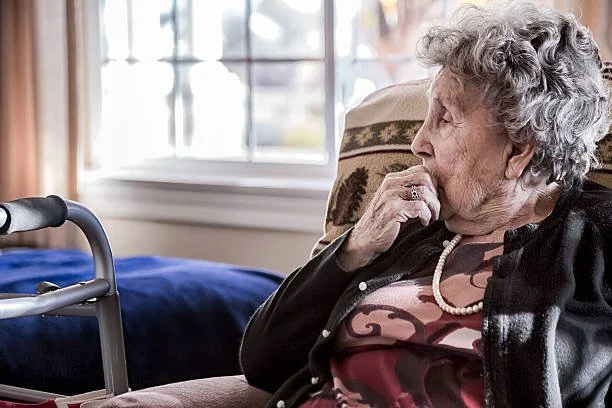
Care home residents often face significant losses when moving into care, including their homes, possessions, and connections with loved ones. Families experience guilt and disconnection, while overburdened care staff struggle to provide emotional support beyond basic care needs. Our challenge was to design a platform that helps residents retain their sense of identity and connection, while easing the emotional burden on families and enabling staff to engage more meaningfully with residents—all without adding complexity during a stressful life transition.
Understanding the user
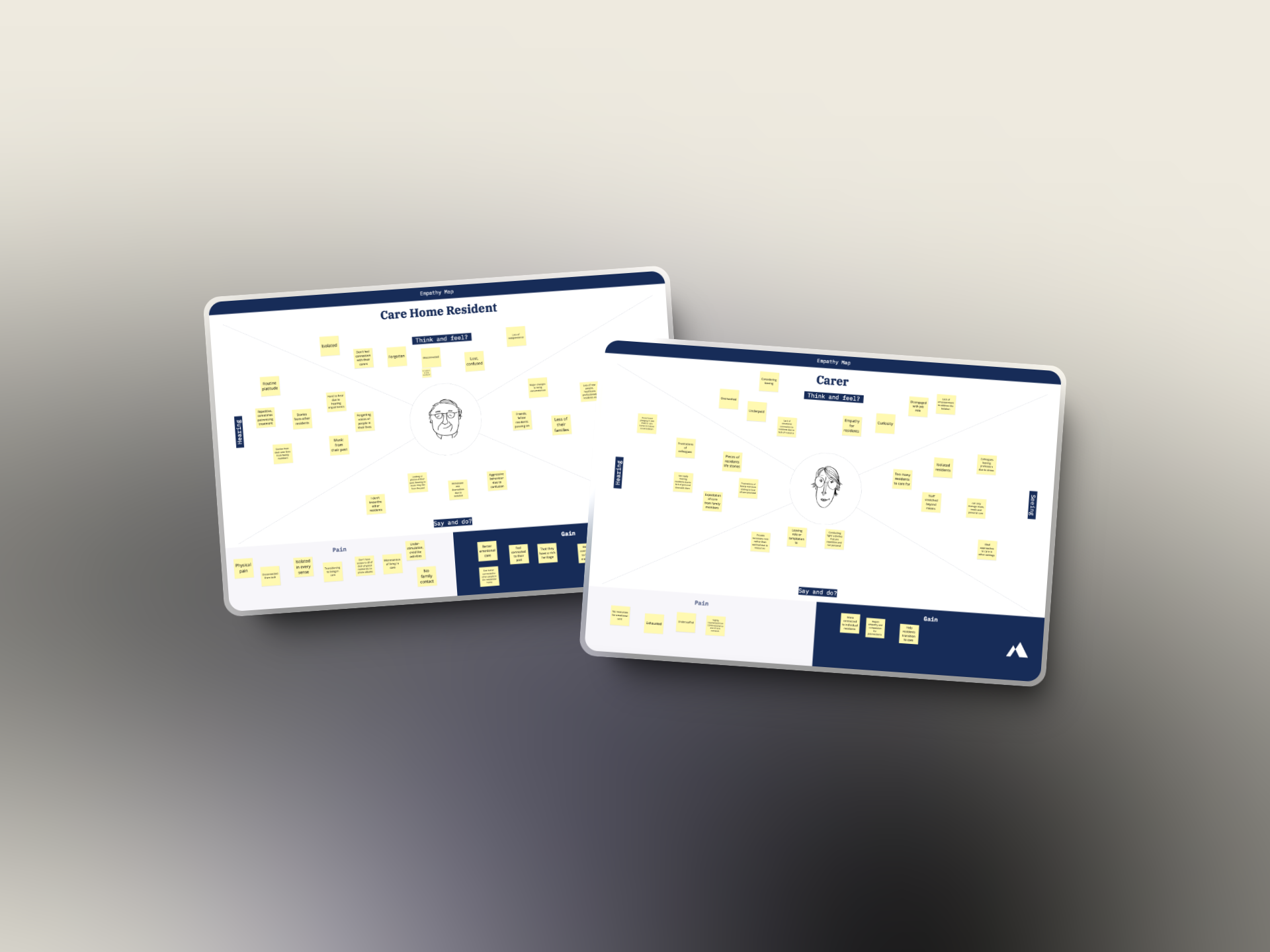
To guide our design process, we created empathy maps and personas as artefacts based on initial assumptions about the users and the valuable insights gained from interviews and testing. These tools helped us visualise user needs, emotions, and behaviours.
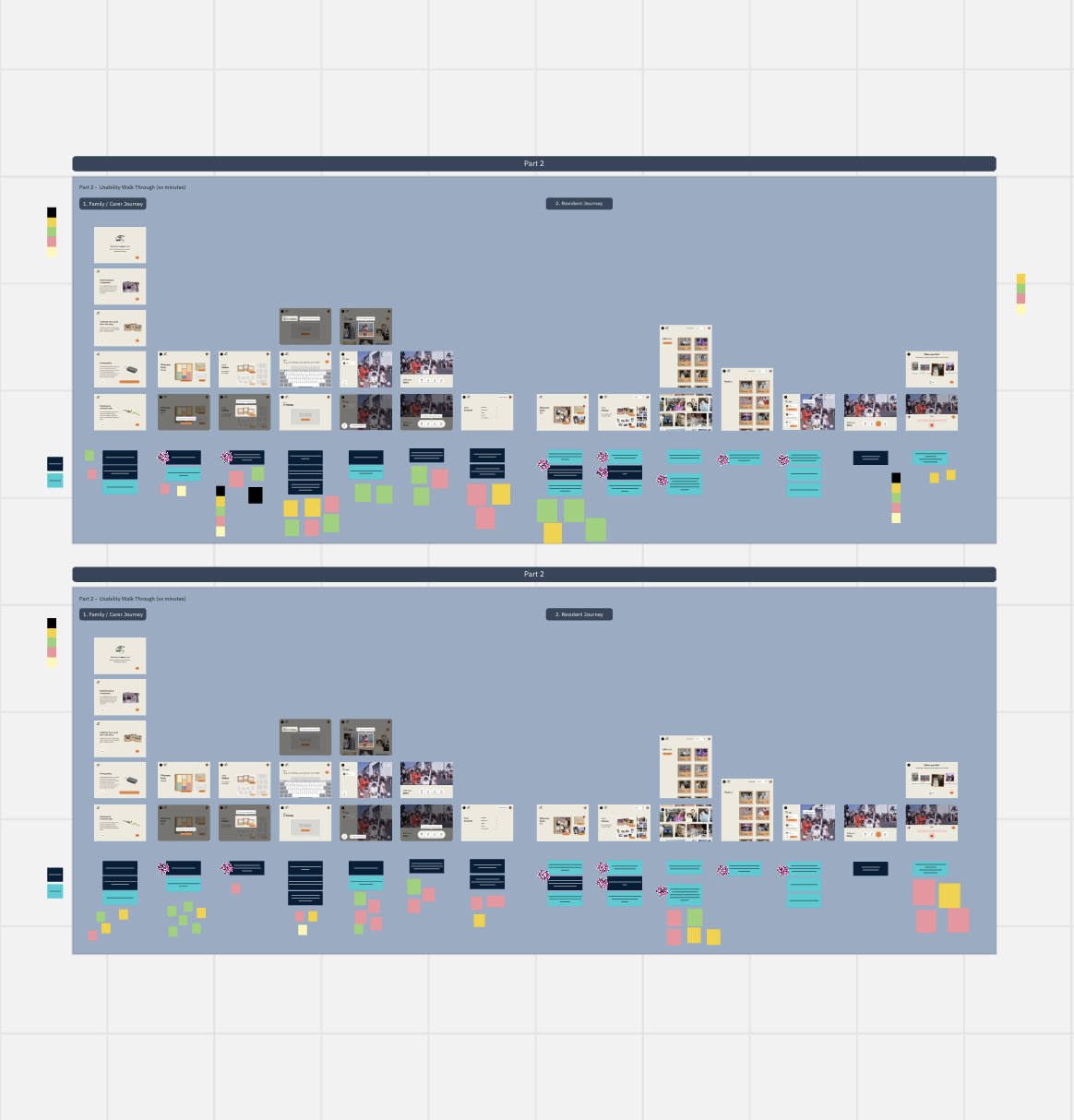
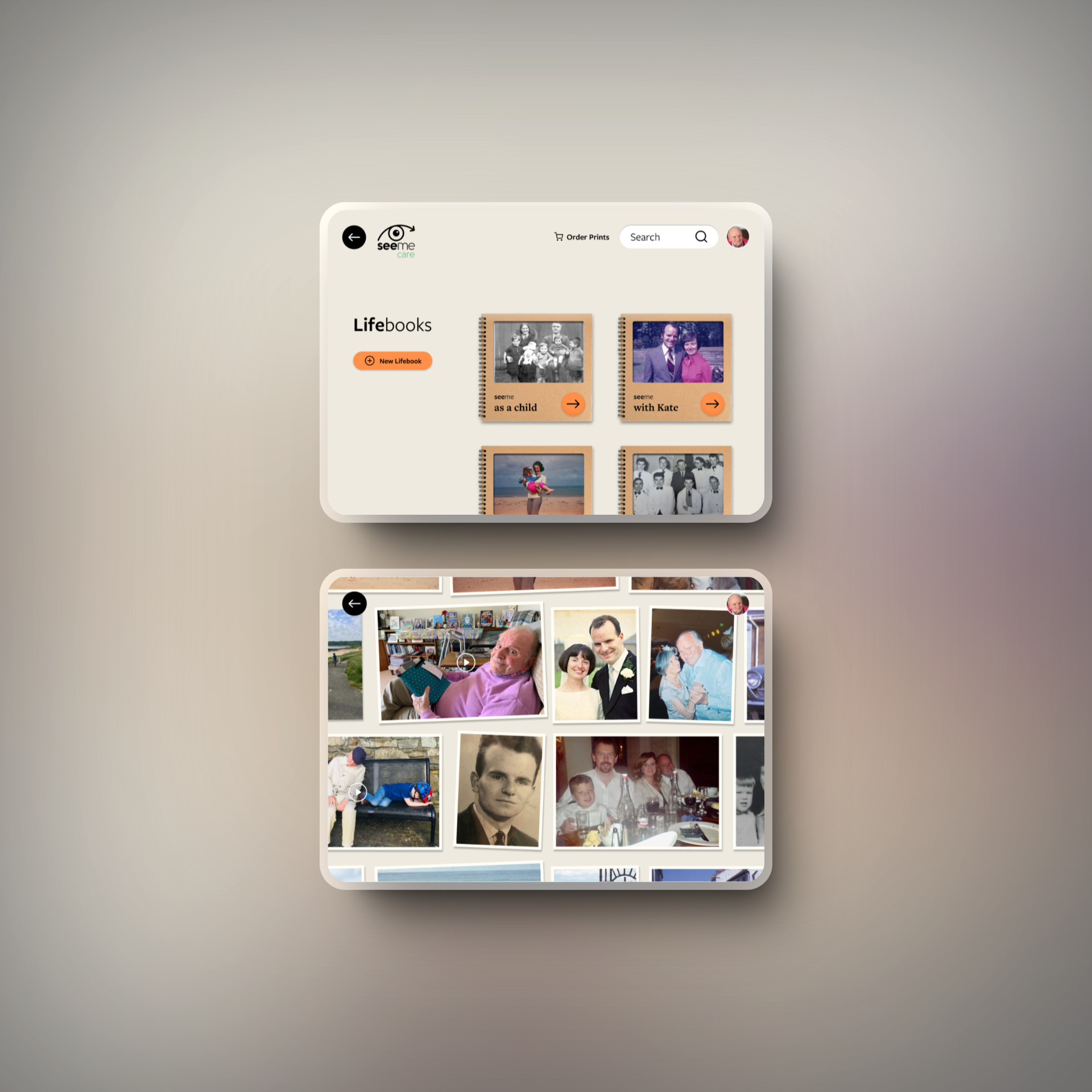
Through interviews and testing with families of care home residents, we gathered valuable insights to inform SeeMe Care’s design. Participants were enthusiastic about the platform’s potential to maintain connections, especially for geographically distant relatives. However, feedback indicated that some terms like "Lifebox" and "Lifebooks" were new to users, prompting us to refine how features were presented with guided onboarding.
Designing the Experience
As the Interaction Designer, my role was to translate user insights into an intuitive and meaningful user experience. Although SeeMe Care is still progressing through development stages, the concepts we designed were crafted to ensure they would resonate with users and adapt to their needs. Our approach included:
User-Centred Design:
We prioritised accessibility by designing a clear, easy-to-navigate interface tailored for elderly users with varying digital literacy. Large touchpoints, clean navigation, and a straightforward design ensured approachability for all users.Life-Books for Personal Storytelling:
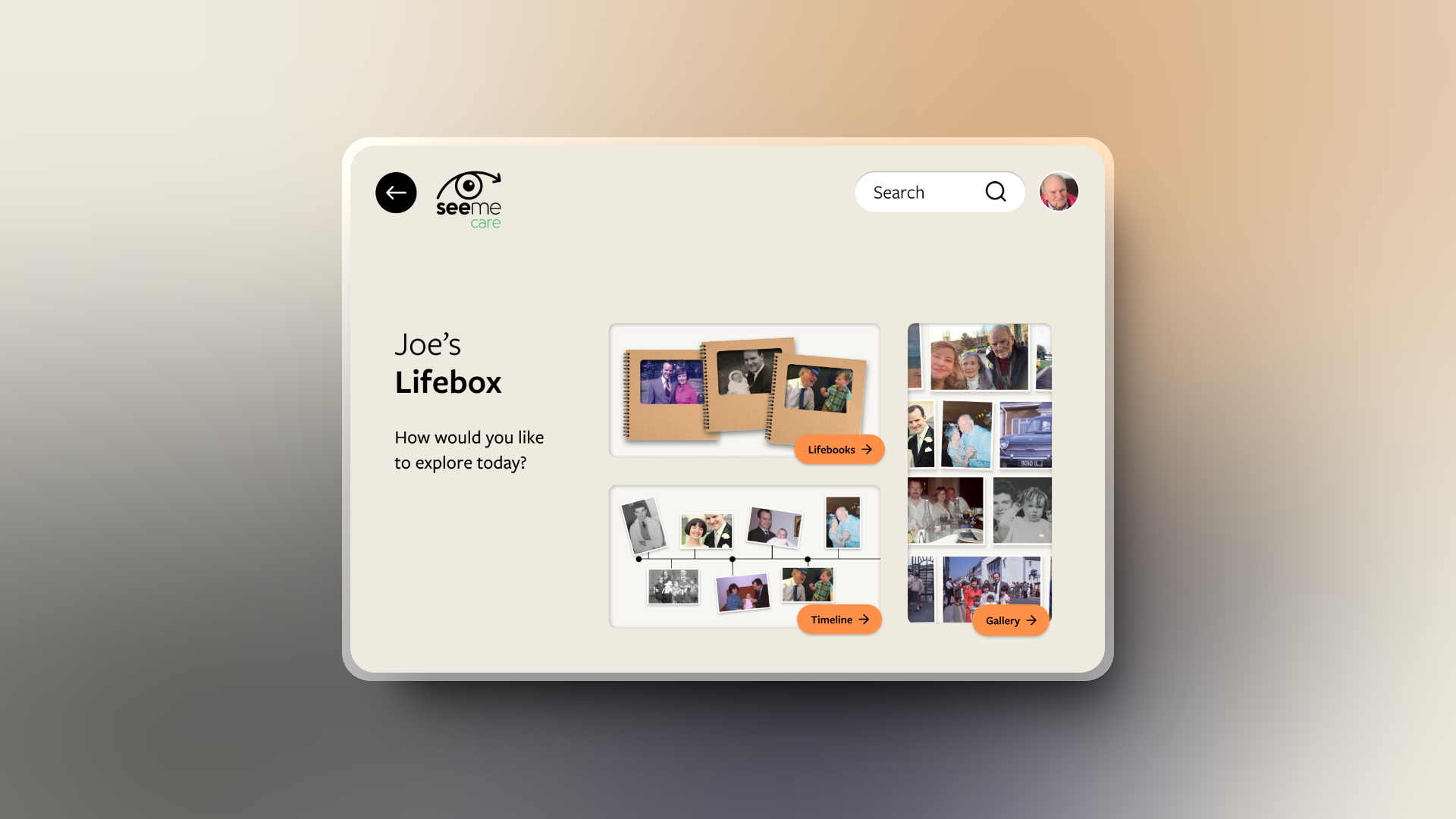
Life-Books are interactive collections that document a resident’s life through categories like “SeeMe at Home,” “SeeMe with Family,” and “SeeMe Travel,” designed to evoke memories, foster conversations, and help care staff connect with residents' personal histories.Refined Onboarding Process:
We adjusted the onboarding flow based on early feedback to make it simple and supportive, incorporating clear guidance and easy-to-follow instructions to help families and residents quickly understand the platform.Iterative Design Testing:
We tested our prototypes with real users to ensure the core ideas resonated, refining the design to align with their expectations and validating the concept's potential for positive impact.
Outcomes and Impact
Positive User Feedback:
Participants found the platform easy to use and appreciated its potential to maintain emotional connections with their loved ones. The feedback validated our design choices, highlighting the platform’s potential to reduce social isolation.Enhanced Engagement for Families:
Families, particularly those who live far away, expressed that SeeMe Care would help them stay involved in their loved one’s life, even when they couldn’t visit in person. This capability to contribute remotely was highly valued.Improved Well-Being for Residents:
SeeMe Care’s ability to support personal storytelling and shared memories showed promise in fostering better engagement and reducing isolation. Residents felt more connected, both to their own past and to their families.Supporting Care Staff:
Care home staff also responded positively to the concept, noting how it could help them better understand residents on a personal level, improving interactions and care quality.
Reflecting on the Journey
Designing SeeMe Care was an exciting opportunity to address a critical emotional need within the care home environment. By focusing on personal storytelling, communication, and user-centred design principles, we created a platform that has the potential to bring comfort and connection to residents during a vulnerable life transition.
Our iterative design process, coupled with user testing, was crucial in validating the platform’s core features. Although still in development, SeeMe Care is well-positioned to make a significant impact on the lives of residents, their families, and care home staff.